CDL Classes A, B, C Explained — Which Do You Need?
What's the difference between a Class A, B and C CDL? Weight limits, what each class lets you drive, required endorsements and which fits your career goal.
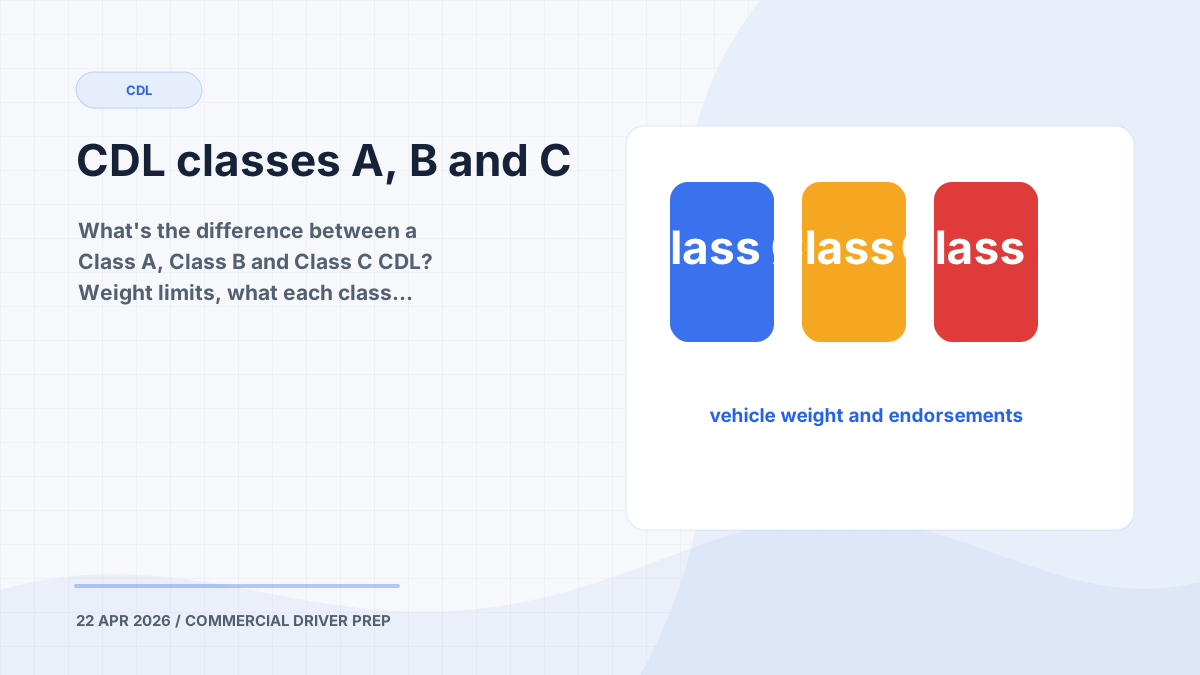
If you’re new to commercial driving, the A / B / C thing is the first source of confusion. Here’s exactly what each class means, and which one matches the work you actually want.
Quick comparison
| Class | What you drive | Combined GVWR | Trailer GVWR | Typical jobs |
|---|---|---|---|---|
| Class A | Tractor-trailers, doubles, triples | 26,001+ lbs | >10,000 lbs | Long-haul, tankers, flatbeds, freight |
| Class B | Straight trucks, large buses, dump trucks | 26,001+ lbs | ≤10,000 lbs | Local delivery, garbage, transit buses, school buses |
| Class C | Smaller HazMat, 16+ passenger vehicles | <26,001 lbs | <10,000 lbs | Small shuttles, small HazMat tankers |
The simple rule: Class A = anything with a heavy trailer. Class B = anything heavy without a trailer (or with a light trailer). Class C = smaller commercial vehicles that still need an endorsement (HazMat or passenger).
Class A — the most flexible licence
A Class A CDL lets you drive anything in Class B or C as well. That’s why most career truckers go straight for Class A even if their first job is local — it keeps every door open.
You need a Class A for:
- Conventional tractor-trailer (Peterbilt, Kenworth, Volvo pulling a 53’ trailer)
- Doubles and triples (with the T endorsement)
- Most over-the-road work
- Tankers over 10,000 lbs (with the N endorsement)
- Most flatbed and reefer freight
Common endorsements paired with Class A:
- T — Doubles/Triples
- H — HazMat (study guide)
- N — Tank Vehicle
- X — Combination of N + H
- Air Brakes (no L restriction) — required for almost any tractor
Did you know? A Class A driver who passes a Class A road test in an air-brake-equipped vehicle automatically qualifies for the Air Brakes endorsement. Take your road test in an automatic-transmission truck though, and you’ll get an E restriction barring you from manual transmissions.
Class B — local work, no trailer
Class B is straight-truck only — single-unit vehicles with a GVWR of 26,001+ lbs. The cab and cargo area are part of one rigid truck.
You need a Class B for:
- Dump trucks
- Garbage / refuse trucks
- Large box trucks (over 26,001 lbs)
- Transit and school buses (with the P or S endorsement)
- Cement mixers
- Roll-off container trucks
Common endorsements paired with Class B:
- P — Passenger (16+ seats)
- S — School Bus
- Air Brakes — required for almost all Class B trucks (Air Brakes practice →)
- H — HazMat (for HazMat box trucks)
Tip: A school bus driver typically needs Class B + P + S + Air Brakes — four separate tests. Plan an extra week of study just for the P and S sections.
Class C — niche but real
A Class C CDL is for vehicles that don’t meet Class A or B weight requirements but still need a CDL because of what they carry:
- 16+ passengers (including the driver) — small shuttle vans, hotel airport shuttles
- HazMat in placarded quantities (any amount that requires placards under 49 CFR 172)
If you’re driving an airport hotel shuttle, this is probably you.
How long does each class take to earn?
| Class | Total time (full-time school) | Self-paced |
|---|---|---|
| Class A | 4–8 weeks | 2–4 months |
| Class B | 3–6 weeks | 1–3 months |
| Class C | 1–3 weeks | 2–6 weeks |
What about endorsements vs. restrictions?
- Endorsements add permissions (H = you can carry HazMat).
- Restrictions remove permissions (E = no manual transmission; L = no air brakes; M = no Class A passenger).
The exam structure:
| Item | Knowledge test? | Skills test? | TSA check? |
|---|---|---|---|
| General Knowledge | ✓ | — | — |
| Air Brakes | ✓ | ✓ (in test vehicle) | — |
| Doubles/Triples (T) | ✓ | — | — |
| Tank Vehicle (N) | ✓ | — | — |
| HazMat (H) | ✓ | — | ✓ |
| Passenger (P) | ✓ | ✓ | — |
| School Bus (S) | ✓ | ✓ | (some states) |
So which class do you need?
| Career goal | Get this |
|---|---|
| Over-the-road trucking | Class A + Air Brakes + T (eventually H) |
| Owner-operator | Class A + Air Brakes + H + N + X |
| Local delivery / dump truck | Class B + Air Brakes |
| School bus | Class B + Air Brakes + P + S |
| Transit bus | Class B + Air Brakes + P |
| Tanker work | Class A + Air Brakes + N (+ H if HazMat tankers) |
| HazMat truck (small) | Class C + H |
| Airport shuttle | Class C + P |
Get started
All three of our apps work together for the most common CDL path:
- CDL Test for General Knowledge + every endorsement section
- Air Brakes Test for the air brake section specifically
- HazMat Test for the H endorsement
Frequently asked questions
Can I upgrade from a Class B to a Class A later?
Do I need a CDL to drive a rental moving truck?
How much does a CDL cost to get?
Is the same exam used in every state?
Related apps
CDL Test
Pass your CDL on the first try
Air Brakes Test
Add the Air Brakes endorsement to your CDL
HazMat Test
Master your Hazardous Materials endorsement
Put what you've read into practice
Free practice quizzes for CDL, HazMat and Air Brakes — no signup.